Ventura County Court calendar provides official hearing dates, courtroom schedule details, and judge assignments for cases filed with the Ventura County Superior Court. It lists criminal, civil, family, and probate matters scheduled throughout the week. People search the calendar to confirm a court appearance schedule, verify hearing dates Ventura County court records show, and review court session planning updates before attending a hearing. The judicial calendar system helps parties avoid missed appearances, bench warrants, or delayed proceedings. By checking current listings, attorneys and self-represented parties can prepare documents, organize evidence, and plan travel time to the courthouse with greater confidence and clarity.
Ventura County Court calendar also supports public transparency by showing daily courtroom schedule information for multiple divisions across Ventura and surrounding areas. Each listing typically includes the case number, party name, department, assigned judge, and scheduled time. Courts update entries when hearings move, judges reassign cases, or emergency closures affect session planning. Reviewing the updated court appearance schedule before the hearing date helps reduce confusion and unexpected delays. Many users rely on the online judicial calendar system to track case progress, monitor rescheduled matters, and stay informed about upcoming court sessions without visiting the courthouse in person.
What Is the Ventura County Judicial Calendar System?
The judicial calendar system is the structured process courts use to schedule hearings, trials, and other case events. It controls the court hearing timetable, manages the docket schedule, and organizes daily court session planning across divisions. In Ventura County, this system operates through the Ventura County Court. Court staff use digital tools and internal scheduling software to assign dates, courtrooms, and judges. Each case receives a place on the trial calendar based on filing date, case type, legal deadlines, and courtroom availability. This organized method keeps cases moving and reduces scheduling conflicts.
How Courts Schedule Hearings
When a case is filed, the clerk enters it into the docket schedule. The system then assigns an initial hearing date. Criminal matters often receive faster settings than civil disputes. Family and probate cases follow separate court session planning timelines. Judges control their own courtroom schedule within assigned departments. They set motion hearings, status conferences, and trial dates based on available time slots. The judicial calendar system balances:
- Case urgency
- Statutory deadlines
- Courtroom availability
- Judicial workload
- Attorney availability
Calendar Call vs. Trial Date
Many people confuse a calendar call with a trial date. These events serve different purposes within the trial calendar. A calendar call is a scheduling hearing. During this session, the judge reviews case readiness, confirms attorney availability, and may assign or adjust the final trial date. It acts as a checkpoint within the docket schedule. A trial date, on the other hand, is the day evidence presentation begins. Witness testimony, jury selection, and legal arguments occur on that date. The judicial calendar system separates these events to manage courtroom time effectively and avoid last-minute disruptions.
How Courtroom Schedules Are Organized
Court session planning spreads cases across multiple departments to keep the docket schedule balanced. Large trial blocks often reserve full days, while shorter hearings fill smaller time slots. This structure keeps the court hearing timetable predictable for judges, attorneys, and the public. Each department within the court maintains its own courtroom schedule. Criminal, civil, family, and probate divisions follow different hearing blocks throughout the week. For example:
- Morning sessions may focus on arraignments
- Afternoon sessions may handle motion hearings
- Certain days may reserve time for trials
Role of Court Clerks in the Judicial Calendar System
Court clerks play a central role in maintaining the judicial calendar system. They:
- Enter case filings into the docket schedule
- Assign hearing dates under judicial direction
- Update continuances and rescheduled matters
- Post scheduled courtroom calendars for public viewing
Real-Time Updates vs. Scheduled Postings
Most courts publish calendars in advance. These scheduled postings show hearings set days or weeks ahead. Real-time updates occur when judges grant continuances or emergencies affect session planning. Some changes appear quickly in the digital docket schedule. Others may update overnight after clerk processing. For that reason, checking the court hearing timetable shortly before a scheduled appearance helps confirm the latest status.
How to Search Court Calendar
After visiting the official portal: https://courtservices.venturacounty.gov/CourtServiceHome.aspx
You will see the Court Services page with four main buttons:
- Case Payment / Extension
- Case Information
- Docket Information
- Courtroom Calendar
Click “Courtroom Calendar”
- On the Court Services page, locate the button labeled Courtroom Calendar.
- Click the button.
- The system will open the calendar search page.
Select Search Criteria
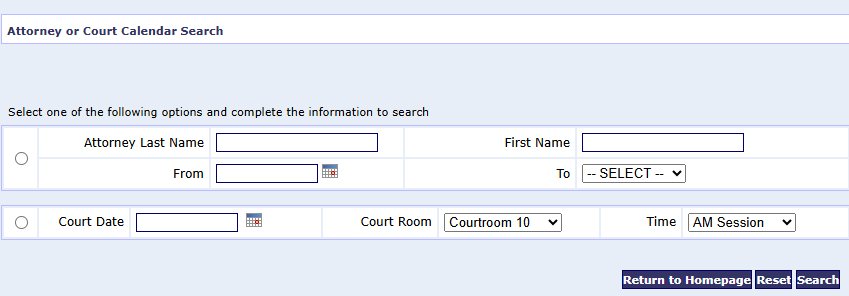
On the Courtroom Calendar search page, you will see search fields. These usually include:
- Attorney Last Name
- Attorney First Name
- Courtroom Number
- Date From
- Date To
Search by Courtroom
The system will display the courtroom schedule for that department. This shows all cases set for that date, including times and case numbers. If you know the department number:
- Enter the Courtroom Number
- Select the desired date range.
- Click Search.
Search by Attorney Name
If searching by attorney:
- Enter the attorney’s Last Name.
- Add First Name if needed.
- Select a date range.
- Click Search.
Review the Results
After clicking search, the appearance schedule search results will show:
- Case number
- Party name
- Hearing date
- Time
- Department
- Judge
- Hearing type
What This Calendar Shows
It reflects scheduled postings within the judicial calendar system. Some updates may post overnight if hearings change late in the day. The Courtroom Calendar provides:
- Daily hearing lists
- Upcoming trial calendar dates
- Motion hearings
- Arraignments
- Status conferences
Ventura County Court Hearing Dates by Case Type
Hearing dates Ventura County court schedules differ based on division, urgency, and courtroom assignment. Each department follows its own structured timetable that determines how soon a case appears before a judge. The Ventura County Superior Court organizes calendars to manage thousands of filings each year. Criminal matters often move faster due to custody deadlines, while civil and probate cases follow longer preparation timelines. Family law hearings may receive priority if children or safety issues are involved. Reviewing the correct case type calendar helps parties confirm appearance dates, prepare documents, and avoid missed hearings.
Criminal Court Calendar
The criminal court calendar handles arraignments, pretrial hearings, motions, probation matters, and jury trials. Departments often operate daily due to high case volume and statutory time limits. Judges must schedule felony court dates within required deadlines, especially for in-custody defendants. Misdemeanor appearance timetable settings may move faster when defendants seek early resolution. Courts adjust the arraignment schedule if new charges are filed or bail conditions change. Criminal calendars frequently update, so checking hearing dates Ventura County court listings shortly before court helps prevent missed appearances or bench warrants.
- Arraignment schedule
- Felony court dates
- Misdemeanor appearance timetable
Civil Court Calendar
The civil court calendar manages lawsuits involving contracts, property disputes, business conflicts, and personal injury claims. Civil hearing dates depend on filing order, courtroom workload, and statutory deadlines. Courts use structured court session planning to assign motion calendar hearings and trial dates. The case management conference schedule allows judges to monitor progress and adjust deadlines when needed. Civil matters often require multiple appearances before trial begins. Larger cases may reserve several consecutive days on the trial calendar. Reviewing the civil schedule regularly helps parties track upcoming hearings and prepare required filings.
- Civil hearing dates
- Motion calendar
- Case management conference schedule
Family Law Calendar
The calendar addresses divorce, custody, support, and restraining order matters. Courts often prioritize cases involving children or safety concerns. Child custody hearing dates may be set quickly when urgent circumstances arise. The family court schedule includes status conferences, settlement hearings, and trial settings for contested matters. Restraining order hearings usually receive expedited placement on the court hearing timetable. Judges may require mediation before certain custody hearings proceed. Family departments often maintain separate weekly calendars for domestic violence, support enforcement, and post-judgment modifications.
- Child custody hearing dates
- Divorce court schedule
- Restraining order hearing
Probate Calendar
The probate calendar oversees estate administration, guardianship, and conservatorship proceedings. Estate hearing timetable entries typically occur on designated probate days each week. Courts review petitions, executor appointments, inventory filings, and final account approvals. Guardianship court dates may include investigation reviews and follow-up compliance hearings. Probate matters often extend over several months due to notice requirements and asset evaluation timelines. Judges rely on structured docket planning to prevent delays in estate distribution. Checking the probate calendar frequently helps fiduciaries and family members remain informed about upcoming court appearances.
- Estate hearing timetable
- Guardianship court dates
Ventura County Courtroom Schedule & Department Listings
Courtroom schedule details show where and when each case will be heard within the Ventura County Superior Court. Every hearing is assigned to a specific department number, which corresponds to a physical courtroom inside the courthouse. This structure keeps daily operations organized and prevents overlapping hearings. Court administrators use department listings to balance caseloads across judges and divisions. Reviewing the correct courtroom schedule before attending court helps parties arrive on time, bring proper documents, and avoid last-minute confusion about location changes.
Department Numbers
Department numbers identify individual courtrooms rather than specific judges. Each department usually handles a defined case category such as criminal, civil, family, or probate. This system allows the court to manage calendars efficiently even if judicial assignments shift during the year. Criminal departments often hear matters every weekday, while civil and probate departments may schedule hearings on selected days. Family law departments sometimes reserve certain days for custody or restraining order matters. Knowing the assigned department number helps parties report to the correct floor and courtroom without delay.
Judge Assignment
Judges are assigned to departments through internal administrative planning. A judge typically presides over all cases listed on that department’s courtroom schedule during their assignment period. When caseloads increase or staffing changes occur, the court may reassign judges to different departments. In temporary situations, a substitute judge may handle hearings without changing the department number. This structure keeps the calendar stable and reduces disruption for attorneys and litigants. Department continuity helps maintain organized court session planning throughout the year.
Daily vs Weekly Courtroom Schedule
Some departments publish a daily schedule, particularly in criminal court where arraignments and short hearings occur frequently. Other divisions post weekly calendars that list hearings several days in advance. Civil motion days may appear once or twice each week depending on workload. Probate calendars often operate on fixed weekly sessions. Reviewing the most recent posting helps confirm correct dates and times before attending court. Regular calendar checks reduce the chance of arriving on the wrong day or at the wrong time.
- Arraignments
- Short motion hearings
- Status conferences
- Civil motion calendar
- Probate petitions
- Family law review hearings
How to Find Which Courtroom to Attend
To determine the correct courtroom, parties should review their filed court documents and confirm the assigned department number. The online calendar search allows users to verify the courtroom schedule by entering a case number or party name. The result will display the department, hearing date, and time. Some courthouses post printed calendars near entrances on the morning of hearings. Arriving early gives time to locate the department floor and check posted updates.
Courtroom Changes & Updates
Courtroom assignments can change due to judge rotation, emergency closures, or case transfers between departments. Administrative staff update the online courtroom schedule when adjustments occur. Late-day changes may appear the evening before a hearing, especially in high-volume divisions. Parties should review the calendar shortly before their appearance date to confirm the assigned department remains the same. Staying informed about schedule updates helps avoid delays and missed hearings.
What Information Appears on a Court Appearance Schedule?
A court appearance schedule provides a structured summary of an upcoming hearing, including case identification, courtroom assignment, and timing details. It acts as an official reference for parties appearing before the Ventura County Superior Court. Courts publish these schedules through online calendar systems and courthouse postings. Reviewing the schedule helps confirm attendance requirements and prevents missed appearances. Each listing follows a standardized format so users can quickly scan important information. Checking the schedule shortly before the hearing date helps confirm no recent changes have occurred.
Case Number
The case number uniquely identifies each court file and connects the hearing to its legal record. It typically contains letters and numbers that reflect the filing year and case category. This number is required for accurate online searches and clerk inquiries. Entering the full case number exactly as shown on court documents produces precise results. A small typing error may return no match. Always verify formatting, including dashes or prefixes, before conducting a calendar search.
Party Names
The schedule lists the primary party names connected to the case. In criminal matters, it shows the defendant’s name. Civil cases display plaintiff and defendant names. Family and probate entries may list petitioners, respondents, or estate titles. Accurate name spelling ensures proper identification in the calendar. If multiple cases involve similar names, reviewing the case number helps confirm the correct listing. Party names appear in a consistent format to simplify review.
Department
The department number indicates the assigned courtroom for the hearing. Each department corresponds to a physical courtroom location inside the courthouse. This system keeps hearings organized across different case types. Judges may rotate, yet the department number usually remains stable. Checking the department number before arrival prevents confusion. Some courthouses post daily printed calendars near entrances to confirm department listings.
Time
The hearing time shows when the case will be called before the judge. Some calendars display a general session start time, such as 8:30 a.m., for grouped appearances. Others provide specific time slots for motion hearings or trials. Arriving early allows time for security screening and courtroom check-in. Late arrival may result in the case being called without the party present.
Hearing Type
The hearing type explains the purpose of the court appearance and guides preparation requirements. It informs parties whether documents, witnesses, or legal arguments are needed. Clear labeling helps reduce confusion and improves court session planning for attorneys and self-represented litigants.
- Arraignment
- Motion hearing
- Case management conference
- Trial setting conference
- Sentencing
- Probate petition review
Status
The status field reflects the current position of the hearing within the court calendar. It may show whether the matter is confirmed, completed, or pending review. Courts update this field when changes occur. Monitoring the status before court ensures accurate attendance planning. A quick status check can prevent unnecessary courthouse visits if the matter has already been resolved or rescheduled.
Continuance
A continuance indicates that the court postponed the original hearing date. When granted, the schedule updates to display the new appearance date and time. Continuances may result from scheduling conflicts, incomplete filings, or judicial availability. Reviewing the updated calendar close to the hearing date helps confirm the latest setting. Failure to appear on the revised date may lead to penalties or further delays in the case.
Ventura County Court Calendar Rules & Deadlines
The Ventura County court calendar operates under structured timelines that control filing deadlines, motion cut-off dates, and scheduled hearings. These rules are set by the Ventura County Superior Court and follow California procedural law. Every case placed on the calendar must meet specific timing requirements. Courts rely on these deadlines to keep dockets organized and prevent unnecessary delay. Missing a deadline can affect a party’s legal rights and may lead to sanctions, dismissal, or other court action.
Filing Deadlines
Filing deadlines determine when documents must be submitted before a hearing. Motion papers usually require advance filing within a set number of court days. Responses and replies follow separate timelines. Courts may reject late filings unless a judge grants permission. Reviewing local court rules before submitting documents helps avoid procedural errors.
Motion Cut-Off Dates
Motion cut-off dates limit when certain legal requests can be filed. In civil cases, courts often set deadlines for filing dispositive motions before trial. After that cut-off date, the court may refuse to hear additional motions. These dates appear in scheduling orders or case management conference notices. Tracking motion cut-off dates protects a party’s ability to present arguments.
Continuance Requests
A continuance request asks the court to postpone a scheduled hearing. Courts require valid reasons such as scheduling conflicts, medical issues, or incomplete discovery. Parties must usually file a written request before the hearing date. Judges review these requests under local court rules and may grant or deny them. If approved, the court updates the calendar with a new hearing date.
Missing a Hearing
Failing to appear at a scheduled hearing can result in serious consequences. In criminal matters, the court may issue a bench warrant. In civil cases, the judge may dismiss claims or enter default judgment. Courts expect parties to monitor their calendar listings and appear on time.
- Possible bench warrant
- Default judgment risk
- Case dismissal
- Monetary sanctions
Rescheduling Process
To reschedule a hearing, a party must follow formal procedures. This often includes filing a motion, serving the opposing party, and attending a hearing on the request. Informal phone calls rarely change official calendar entries. Only a judge can approve a revised date.
- File motion to continue
- Serve all parties
- Attend approval hearing
- Receive new hearing date
Emergency Hearings
Emergency hearings address urgent matters that require immediate court attention. These may involve protective orders, custody issues, or time-sensitive disputes. Courts review emergency requests carefully and may schedule same-day or short-notice hearings when justified.
- Temporary restraining orders
- Emergency custody requests
- Immediate asset protection
- Time-sensitive injunctions
Locations & Calendar Access
Ventura County court location & calendar access information helps residents find the correct courthouse and confirm their hearing schedule before arrival. The court system serves communities across Ventura County, including Ventura, Oxnard, Simi Valley, and Thousand Oaks. The Ventura County Superior Court operates multiple courthouse facilities. Each location handles specific case types and posts courtroom schedule details both online and inside the building. Checking the assigned department and courthouse address before leaving home prevents confusion and late arrival.
Main Courthouse Location
This location serves as the primary administrative center. Many criminal and civil departments operate here. Daily courtroom calendars are often posted near the building entrance and outside each department door. The main courthouse in Ventura handles criminal, civil, family, and probate matters.
Address Format:
Ventura County Superior Court
800 South Victoria Avenue
Ventura, CA 93009
East County Courthouse
The East County courthouse serves residents in the eastern region of the county, including Simi Valley and Thousand Oaks areas.
Address Format:
Ventura County Superior Court – East County
3855-F Alamo Street
Simi Valley, CA 93063
Juvenile Courthouse
Juvenile matters are heard at a separate facility serving the Oxnard region.
Address Format:
Ventura County Superior Court – Juvenile Division
4353 East Vineyard Avenue
Oxnard, CA 93036
Where Courtroom Calendars Are Posted
Reviewing both online and physical postings ensures accurate department confirmation. Calendar access is available in two main ways:
- Online Calendar Access
The official court website provides searchable courtroom schedules by case number, party name, or department. - Physical Calendar Postings
Courts post daily schedules:- Near courthouse entrances
- On lobby bulletin boards
- Outside each courtroom door
Frequently Asked Questions
Understanding how the court calendar works can prevent missed hearings and unnecessary penalties. The following frequently asked questions address common concerns about checking dates, arrival times, and schedule updates. Each answer is structured clearly to support quick reference and featured snippet visibility for users searching about the Ventura County Superior Court.
How do I find my Ventura County court hearing date?
To find your Ventura County court hearing date, visit the official website of the Ventura County Superior Court and access the online case search or courtroom calendar section. Enter your case number, citation number, or full legal name exactly as it appears on court documents. The system will display your upcoming hearing date, assigned department, and scheduled time. If you cannot locate your case online, you may contact the clerk’s office for assistance during business hours. Always verify your hearing date one day before appearing, as schedule changes, department transfers, or continuances may be entered shortly before the court session begins.
Can I search the Ventura County court calendar by name?
Yes, you can search the Ventura County court calendar by name for many public case types. The online calendar tool allows users to enter a first and last name to locate scheduled hearings. After submitting the search, matching cases appear along with their court dates, departments, and hearing types. Carefully review the results to confirm the correct case by checking the filing year or partial case number. Some confidential matters, such as juvenile cases, may not appear due to privacy laws. If no results are found, confirm the spelling or try searching with a case number instead.
What time should I arrive for my court appearance?
You should plan to arrive at least 30 minutes before your scheduled court appearance. Courthouses require time for parking, security screening, and locating the assigned courtroom. Court sessions usually begin promptly at the listed time, and judges may call cases quickly once the calendar starts. Arriving early ensures you can check the posted department calendar outside the courtroom to confirm your case is listed correctly. If you arrive late, your case may be called without you present, which could result in negative consequences. Early arrival helps you remain prepared, organized, and respectful of the court’s schedule.
Are Ventura County court calendars updated every day?
Ventura County court calendars are typically updated daily to reflect new filings, continuances, courtroom changes, and judge reassignments. Updates often occur at the close of business or early in the morning before hearings begin. Because last-minute modifications can happen, it is recommended to check the calendar the evening before and again on the morning of your court date. Online listings generally mirror the physical calendars posted inside the courthouse. Reviewing the most current schedule reduces the risk of attending the wrong department or missing an updated time slot. Regular calendar checks are especially important in active or recently continued cases.
What happens if I miss my Ventura County court date?
Missing your Ventura County court date can result in serious consequences depending on the case type. In criminal matters, a judge may issue a bench warrant for your arrest. In traffic cases, additional fines or driver’s license suspensions may occur. For civil or family matters, the court may proceed without you and issue orders in your absence. If you realize you missed a hearing, contact the clerk’s office immediately to determine available options. Acting quickly may allow you to request relief, reschedule the matter, or address penalties before further enforcement action is taken by the court.