Ventura County Family Court manages legal disputes involving children, parents, and spouses within the Superior Court of California, County of Ventura. Ventura County Family Court Services supports families through mediation services, custody evaluation, and court recommendations in child custody cases and other family law matters. The program operates as part of the county’s family court system and domestic relations court structure. It helps judges make informed decisions that protect children’s safety and parental rights. Families must often attend mediation before a custody hearing. This process encourages cooperation, reduces courtroom conflict, and promotes stable parenting plans that reflect the best interests of the child.
Ventura County Family Court handles a wide range of family law matters that affect daily life and long-term family stability. Parents use the service during divorce, separation, or parentage actions to resolve custody and visitation disputes. Guardians and relatives may seek court involvement to protect a child’s welfare. The court addresses supervised agreements when safety concerns arise and may order monitored visitation. Trained mediators work with both parties to reach workable solutions. If parents cannot agree, the mediator may submit a recommendation to the judge. Through structured mediation and custody review, the court supports fair outcomes within the local family court system.
What Is Ventura County Family Court Services?
Ventura County Family Court Services is a court-connected program that supports parents involved in custody and visitation disputes within the Ventura County Court of California, County of Ventura. It operates under the domestic relations division and provides court-supervised mediation and custody recommending counseling. The program helps families resolve parenting conflicts before a judge issues a final order. Ventura County Family Court Services focuses on practical solutions that protect children’s stability. Mediators gather information, encourage respectful discussion, and work to reduce hostility. This structured family dispute resolution process supports informed judicial decisions and promotes balanced parenting arrangements.
Family Court vs. Family Court Services
Ventura County Family Court and Ventura County Family Court Services perform different roles within the same legal system. Family Court refers to the judge and courtroom where legal rulings are made. Family Court Services works behind the scenes to help parents attempt agreement before a hearing takes place. The distinction matters, since FCS does not issue court orders. Instead, trained mediators guide discussions and prepare recommendations when needed. This separation supports fairness and improves efficiency within the domestic relations division.
- Family Court: A judge hears cases, reviews evidence, and issues legally binding orders.
- Family Court Services: A mediator or counselor works with parents to resolve disputes before or during the court process.
Role in Custody and Visitation Disputes
Ventura County Family Court Services plays a direct role in resolving child custody cases and visitation disagreements. Parents meet with a mediator to address parenting schedules, communication problems, and decision-making authority. The mediator focuses on the child’s best interests and encourages both parties to propose workable solutions. If conflict remains high, custody recommending counseling may take place. In that situation, the mediator provides written input to assist the judge. This process strengthens family dispute resolution and supports safe parenting outcomes.
- Physical custody schedules
- Legal custody decision-making
- Holiday and vacation planning
- Exchange logistics
- Supervised visitation when safety concerns arise
When Services Become Mandatory
Ventura County Family Court Services often becomes mandatory when a parent files a motion about custody or visitation. The court typically requires attendance at court-supervised mediation before scheduling a full hearing. This rule applies in many contested child custody cases. The goal is to reduce unnecessary trials and promote early agreement. Judges may excuse participation in limited situations, such as documented safety concerns. Mandatory mediation improves efficiency within the domestic relations division and encourages responsible co-parenting.
How to Search Ventura County Family Court Cases
A Ventura County family court case search allows the public to review family law case details through the official website of the Superior Court of California, County of Ventura. This online case access system provides limited public information for family court records search, custody case lookup, and court docket search. Users can check hearing schedules, case status, and basic filing information directly from the court’s database.
Use the official Case Inquiry page: https://ventura.courts.ca.gov/online-services/case-inquiry
How This Page Is Reached on the Court Website
Follow this exact path from the homepage:
- Visit https://ventura.courts.ca.gov
- Click Online Services in the main navigation menu
- Select Case Inquiry
- On the Case Inquiry page, click Family Law Database
- Select Family Data Inquiry
Search Methods Available on Family Data Inquiry Page
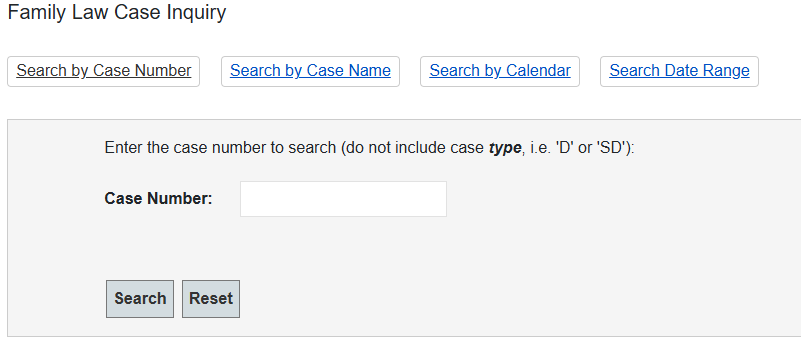
The Family Data Inquiry section allows searches by:
- Case Number
- Case Name
- Calendar
- Date
Search by Case Number
- Click Case Number.
- Enter the full case number exactly as shown on court paperwork.
- Check spelling and formatting carefully.
- Click the search button.
- Review the case summary page.
Search by Case Name
- Click Case Name.
- Enter the last name and first name of a party.
- Use correct spelling.
- Click search.
- Review the list of matching cases.
Search by Calendar
- Click Calendar.
- Select a courtroom or department if prompted.
- Choose a specific date.
- View scheduled family court hearings for that day.
Search by Date
- Click Date.
- Enter a start date and end date.
- Submit the request.
- Review cases filed or scheduled within that date range.
Information Available Through the Search
Users may view:
- Family law case status
- Child custody case information
- Filing dates
- Hearing dates
- Case number confirmation
- Party names
Types of Family Law Cases Handled
Family law cases in Ventura County cover legal disputes involving marriage, children, and financial support. These cases move through the Family Division of the Superior Court of California, County of Ventura. Judges review evidence, apply California law, and issue enforceable court orders. Many cases involve child custody Ventura County disputes, divorce proceedings, and support obligations. The court focuses on child safety, financial fairness, and long-term stability. Each case follows structured filing procedures, scheduled hearings, and mandatory disclosures before final rulings are entered.
Child Custody & Visitation
Child custody Ventura County cases determine where a child lives and how parents share responsibility. The court evaluates the child’s best interests by reviewing health, safety, emotional bonds, and school stability. Judges often require mediation before a custody hearing. Parenting plans outline schedules, holiday time, and exchange logistics. Courts encourage cooperation between parents whenever possible. If agreement fails, the judge issues a custody order. Child custody Ventura County rulings may be modified if circumstances change and a parent files a formal request.
- Legal custody – Authority to make major decisions about education, health care, and welfare
- Physical custody – Where the child lives
Spousal Support
Spousal support filings address financial payments from one spouse to the other after separation. Courts review income, job skills, length of marriage, and living standards during the marriage. Temporary support may begin early in divorce proceedings. Long-term support depends on financial need and earning ability. Judges review written income disclosures before making decisions. Spousal support orders can change if income changes significantly. Both parties must report accurate financial information to avoid penalties or court sanctions.
- Duration of marriage
- Financial need
- Ability to pay
- Contributions to career or education
Child Support
Child support cases ensure children receive financial care from both parents. California guidelines calculate support using income and parenting time percentages. Child custody Ventura County arrangements directly affect support amounts. Courts examine pay stubs, tax returns, and insurance expenses. Support orders remain enforceable until modified by the court. Parents may request changes after job loss or income increase. Failure to pay can result in wage garnishment or other enforcement actions under state law.
Divorce & Legal Separation
Divorce proceedings legally end a marriage, while legal separation allows spouses to live apart without ending marital status. Both processes address property division, support, and child custody Ventura County planning. California community property rules usually divide marital assets equally. Couples must exchange financial disclosures before final judgment. Courts review settlement agreements carefully before approval. Legal separation may convert to divorce later if one party files an updated petition.
- Division of property and debts
- Spousal support
- Child custody Ventura County arrangements
- Child support
Parentage Cases
Paternity cases establish the legal father of a child when parents were unmarried at birth. Once confirmed, the court can issue child custody Ventura County orders and child support rulings. Parentage may be determined through voluntary declaration or genetic testing. Establishing legal fatherhood protects parental rights and financial responsibility. Courts prioritize the child’s stability during these proceedings. After parentage is confirmed, either parent may request custody or visitation orders.
Domestic Violence Orders
Domestic violence restraining orders protect victims from abuse, threats, or harassment. A judge may issue temporary protection quickly after a filing. A formal hearing follows to determine long-term orders. Child custody Ventura County decisions often change when safety concerns arise. Courts place child welfare first in these hearings. Protective orders can limit contact and restrict firearm possession. Violations can lead to arrest or criminal penalties.
- Stay-away requirements
- No-contact provisions
- Temporary child custody Ventura County arrangements
- Firearm restrictions
Child Custody in Ventura County
Child custody Ventura County cases determine where a child will live and how parents will share legal rights and responsibilities. These cases are handled by the Family Division of the Superior Court of California, County of Ventura. Judges focus on the best interest of the child during custody hearings and review each family’s situation carefully. Orders may begin as temporary and later become permanent after full review. Courts aim to create stability, reduce conflict, and protect meaningful parent-child relationships through structured parenting plans and enforceable custody rulings.
Legal Custody vs. Physical Custody
Child custody Ventura County law separates custody into legal and physical categories. Legal custody addresses decision-making authority, and physical custody determines where the child resides. Courts may award joint custody when parents can cooperate effectively. Sole custody may be granted if one parent cannot safely share responsibilities. Judges review evidence, parenting history, and daily routines before making decisions. The goal is to create a balanced structure that promotes consistency in the child’s life and supports healthy development across both households.
- Education
- Medical care
- Religious upbringing
- General welfare
How Custody Is Decided
Custody hearings in Ventura County focus on factors tied to the best interest of the child. Judges review safety concerns, emotional bonds, and each parent’s ability to provide a stable home. The court examines school continuity, health needs, and communication patterns between parents. Evidence may include written declarations, testimony, and prior court records. When risk factors appear, the court may limit parenting time or order supervised contact. Each decision aims to support the child’s emotional growth and long-term security.
- The child’s health and safety
- Emotional ties with each parent
- History of abuse or neglect
- Stability of each home environment
- Ability of parents to cooperate
Mediation Requirement Before Hearing
Child custody Ventura County procedures require mediation before most custody hearings take place. Parents meet with a neutral mediator through Family Court Services. The mediator helps both sides discuss concerns and draft possible parenting plans. This step encourages cooperation and reduces courtroom disputes. If parents reach agreement, the proposal is submitted to the judge for approval. If agreement fails, the mediator may submit recommendations. Mediation supports structured communication and prepares families for formal court review.
Parenting Plans and Court-Supervised Agreements
Parenting plans outline daily schedules, holidays, school breaks, and exchange logistics. Child custody Ventura County orders often include detailed visitation schedules to prevent future disputes. Clear plans reduce confusion and support predictable routines for children. Courts may approve court-supervised agreements when safety concerns exist. Supervised visitation protects the child while maintaining parental contact. Judges review all terms carefully before signing final custody orders to confirm they reflect the best interest of the child.
- Weekly visitation schedule
- Holiday and vacation arrangements
- School break schedules
- Transportation and exchange times
- Communication rules between parents
Mediation Services & Custody Recommending Counseling
Mediation services are a required step in many custody disputes before formal custody hearings move forward. In Ventura County, these dispute resolution services operate through the Superior Court of California, County of Ventura. Parents who request custody or visitation changes must usually attend the court mediation process first. The goal is to reduce conflict and promote child-focused solutions. Parenting mediation encourages respectful communication and structured negotiation. Courts rely on this process to streamline hearings and support stable parenting outcomes.
Mandatory Mediation Process
Before most custody hearings, parents must participate in the court mediation process. The court schedules a session with Family Court Services after a custody request is filed. Attendance is required in most cases unless safety concerns justify separate arrangements. Both parents meet with a neutral mediator trained in family dispute resolution. The session focuses on creating a workable parenting plan. This step often resolves disputes early and narrows the issues presented at the hearing.
- Both parents attend a scheduled session.
- A neutral mediator leads the discussion.
- The focus remains on the best interest of the child.
- Parents discuss custody schedules and parenting concerns.
What Happens During Mediation
Parenting mediation sessions provide a structured setting for open discussion. The neutral mediator asks questions about the child’s daily life, schooling, health care, and communication routines. Parents are encouraged to present realistic proposals for custody and visitation. The mediator helps clarify disagreements and identify shared goals. Sessions may take place in person or through remote platforms approved by the court. Many families reach partial or full agreement during mediation services.
- The child’s daily routine
- School and health needs
- Communication challenges
- Proposed visitation schedule
- Safety concerns
What If Parents Do Not Agree?
If parents cannot agree during mediation services, custody recommending counseling may follow. In this process, the mediator prepares written recommendations for the judge. The mediator may review court filings, prior orders, and statements from both parents. These recommendations outline suggested custody arrangements and visitation schedules. Each parent receives a copy before the custody hearings. The court then reviews the recommendation along with other evidence presented at the hearing.
- The mediator gathers information from both parents.
- The mediator may review relevant documents.
- A written recommendation is prepared.
How Recommendations Go to the Judge
After mediation concludes, the mediator forwards either the signed agreement or written recommendation to the assigned judge. If parents reached agreement, the judge reviews it for fairness and child safety. Approved agreements often become court orders. If recommendations were submitted, the judge evaluates them during custody hearings. Parents may present testimony or evidence at that time. The judge then issues a final custody ruling based on the best interest of the child.
Spousal Support & Child Support Filings
Spousal support filings allow a spouse to request financial assistance during separation or after divorce. In Ventura County, these requests are submitted to the Family Division of the Superior Court of California, County of Ventura. Judges examine income, expenses, and the length of the marriage before issuing temporary support or a permanent support order. Accurate paperwork is required at every stage. Courts rely on financial disclosure forms and verified income information to calculate fair payments. Clear documentation improves efficiency and reduces hearing delays.
How to Request Support
To begin spousal support filings, a party must file a formal Request for Order with the court. This request may be submitted during divorce proceedings or legal separation. The filing party must explain financial need and propose a support amount. The court assigns a hearing date after processing the paperwork. The other party must be formally served. Both sides prepare income declarations for judicial review. Early filing may result in temporary support before final judgment.
- State the amount of support requested
- Explain financial need
- Provide supporting income details
Required Forms
Spousal support filings require detailed financial disclosure forms. These forms give the judge a clear picture of both parties’ financial situations. Each side must submit an Income and Expense Declaration with supporting documentation. Courts review assets, debts, wages, and recurring expenses. Pay stubs and tax returns strengthen the credibility of reported income. Full and honest reporting supports accurate calculations. Missing information may delay the hearing or result in court orders compelling compliance.
- Income and Expense Declaration
- Schedule of Assets and Debts
- Proof of income such as pay stubs
- Tax return copies
Court Review Process
During the hearing, the judge reviews all submitted financial disclosure forms and income declarations. The court evaluates earning capacity, standard of living during marriage, and ongoing financial needs. Temporary support may be issued early in the process. A permanent support order may follow once the divorce becomes final. Judges consider fairness and statutory factors before issuing written orders. Payment amounts, frequency, and duration are clearly stated in the final ruling.
Modification of Orders
Support orders remain enforceable unless changed by the court. Either party may request modification by filing updated spousal support filings supported by new income declarations. A significant change in circumstances must be shown. Courts review job changes, income increases, parenting time adjustments, or health conditions affecting finances. A new hearing is scheduled to examine updated financial disclosure forms. Judges may increase, decrease, or terminate support based on the evidence presented.
- Job loss
- Income increase
- Change in parenting time
- Health-related financial hardship
Domestic Relations Division
The domestic relations division manages family-related cases within the Superior Court of California, County of Ventura. This division handles divorce, child custody, child support, spousal support, and domestic violence matters. It oversees family court administration and coordinates hearings, filings, and traffic court procedures when related violations intersect with family cases. Judicial officers assigned to this division evaluate evidence and issue enforceable court orders. The division works closely with the court clerk office to process documents and maintain accurate records. Structured case management helps move cases forward in a timely and organized manner.
Role of the Domestic Relations Division
The domestic relations division serves as the central authority for family law disputes in Ventura County. It supervises legal proceedings involving parents, spouses, and guardians. Judicial officers conduct hearings, review pleadings, and interpret California family law statutes. The division supports consistent procedures for filing, service of process, and court appearances. Family court administration staff schedule hearings and coordinate courtroom assignments. This structured approach promotes fairness and procedural clarity for all parties involved in family cases.
How Cases Are Assigned
When a family law petition is filed, the court clerk office assigns the case a unique number. The case is then directed to a judicial officer within the domestic relations division. Assignment may depend on courtroom availability or case type. Once assigned, the same judge often manages the case through multiple hearings. This continuity supports effective case management and allows the court to monitor compliance with prior orders. Parties receive official notice of hearing dates and department numbers after filing.
Court Supervision of Agreements
The domestic relations division reviews agreements reached between parties to confirm fairness and compliance with state law. Parenting plans, support agreements, and property settlements must receive judicial approval before becoming binding orders. Judicial officers examine whether terms protect the best interests of children and reflect accurate financial disclosure. If approved, the agreement becomes part of the official court record. The court maintains authority to modify agreements if circumstances change and a formal request is filed.
Location & Contact Information
The Ventura County family court location is within the main courthouse of the Superior Court of California, County of Ventura in the City of Ventura. This court operates under the authority of the Ventura County Government and handles family law matters through its Family Division. Anyone filing divorce, child custody, support, or restraining order cases may need to visit this courthouse address or contact the court clerk office for assistance.
Courthouse Address
Superior Court of California, County of Ventura
Ventura Hall of Justice
800 South Victoria Avenue
Ventura, CA 93009
Court Clerk Contact
The court clerk contact line connects callers to recorded information and department transfers. Staff at the filing window can answer procedural questions, confirm hearing dates, and explain document submission requirements.
Main Phone Number: (805) 289-8900
Family Division Hours
- Clerk’s Office Hours: Monday–Friday, 8:00 AM – 3:00 PM
- Courtrooms may begin hearings at 8:30 AM
- Closed on court holidays
Frequently Asked Questions
Ventura County family court handles custody, support, divorce, and related disputes through the Family Division of the Superior Court of California, County of Ventura. Many people have questions about filing procedures, mediation rules, timelines, and courthouse details. The answers below provide clear, direct information based on Ventura County family court practice.
How do I file for child custody in Ventura County?
To file for child custody in Ventura County, a parent must submit a Petition or Request for Order with the Family Division of the Superior Court of California, County of Ventura. The filing starts the legal process to establish or change custody. After submitting forms, the parent must serve the other party with stamped copies. The court then assigns a hearing date. Before the custody hearing, both parents usually attend mediation through Family Court Services. If mediation results in agreement, the judge may approve it. If not, the judge reviews evidence and issues a custody order based on the child’s best interests.
Is mediation mandatory in Ventura County family court?
Yes, mediation is mandatory in most Ventura County family court custody disputes. When a parent files a request involving custody or visitation, the court schedules mediation before setting a contested hearing. Both parents must attend the session unless a judge excuses participation for safety reasons. A neutral mediator helps parents discuss parenting plans and visitation schedules. The focus remains on the child’s stability and well-being. If parents reach agreement, the mediator prepares a written summary for court approval. If no agreement is reached, the mediator may provide recommendations to the judge, who reviews them during the custody hearing.
How long does a custody case take?
A Ventura County custody case may take several weeks or several months, depending on court scheduling and the level of conflict between parents. Temporary custody orders can be issued at an early hearing if immediate decisions are needed. Final custody rulings often require mediation, document review, and at least one formal hearing. Cases resolve faster when parents agree during mediation. Disputes involving safety concerns or repeated filings may extend the timeline. Court calendar availability and proper service of documents also affect scheduling. Each case moves at its own pace based on complexity and cooperation between parties.
How do I request spousal support?
To request spousal support in Ventura County, a party must file a Request for Order with the Family Division of the Superior Court of California, County of Ventura. The request must include an Income and Expense Declaration and supporting financial documents such as pay stubs. After filing, the documents must be formally served on the other spouse. The court schedules a hearing where both parties present financial information. The judge reviews income, expenses, and the length of the marriage before issuing temporary support or a permanent support order. Accurate financial disclosure is required for fair calculation of payment amounts.
Where is Ventura County Family Court located?
Ventura County Family Court is located at the Ventura Hall of Justice in Ventura, California. The courthouse address is 800 South Victoria Avenue, Ventura, CA 93009. This facility operates under the Superior Court of California, County of Ventura and handles family law hearings and filings. Clerk office hours typically run Monday through Friday during standard business hours, excluding court holidays. Visitors must pass through courthouse security before entering. Public parking is available near the building, though availability may vary during busy court days. Calling ahead can help confirm hours and department assignments.