Ventura County Probate Court handles probate filings, estate administration, and court supervision of wills, trusts, and guardianship matters in Ventura County. It operates under the Ventura County Superior Court and follows California probate court procedures to manage estates after death or incapacity. The court validates wills, appoints executors or administrators, and oversees the legal transfer of property. It protects heirs, beneficiaries, and creditors by reviewing documents, approving inventories, and supervising asset distribution. Through structured probate filings, the court brings legal clarity to estate matters and reduces disputes among family members.
The probate division serves residents throughout Ventura County by handling conservatorship and guardianship cases along with traditional estate matters. In conservatorship proceedings, the court appoints a responsible party to manage finances or healthcare decisions for adults who cannot act independently. In guardianship cases, it protects minors who need legal oversight. Probate services in Ventura County support lawful estate administration, debt settlement, and proper inheritance transfers. Court supervision strengthens accountability, ensures compliance with state law, and promotes fair outcomes in sensitive family situations involving wills and estates division matters.
How to Search Ventura County Probate Court Records
Ventura County probate court records can be searched online using the official Case Inquiry system provided by the Ventura County Court. The portal allows users to review probate filings, case status, and party details through both Case Number Search and Case Name Search options.
Official Case Inquiry Portal URL: https://ventura.courts.ca.gov/online-services/case-inquiry
Open the Official Portal
- Visit: https://ventura.courts.ca.gov/online-services/case-inquiry
- Accept the court’s terms and conditions.
- Continue to the database selection screen.
Select “Probate & Small Claims Database”
- Click “Probate & Small Claims Database.”
- Login using public access credentials if prompted.
- After login, you will see search options.
You will typically see:
- Case Number Search
- Case Name Search
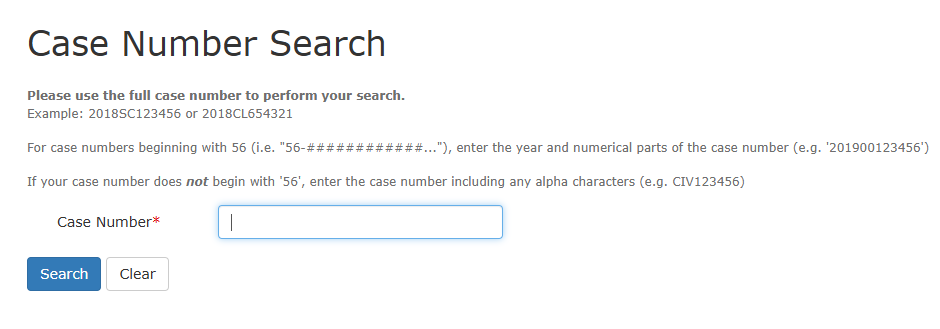
Case Number Search
Use this option if you already have the case number.
How to Search by Case Number:
- Click Case Number Search
- Enter the full case number exactly as shown on court documents
If the case number begins with “56”:
- Enter only the year and numeric portion.
- Example:
- Full number:
56-2019-00123456-PR - Enter:
201900123456
- Full number:
If the case number does NOT begin with “56”:
- Enter the full number including letters.
- Example:
CIV123456
- Click Search
- Click Clear to reset the field if needed
Case Name Search
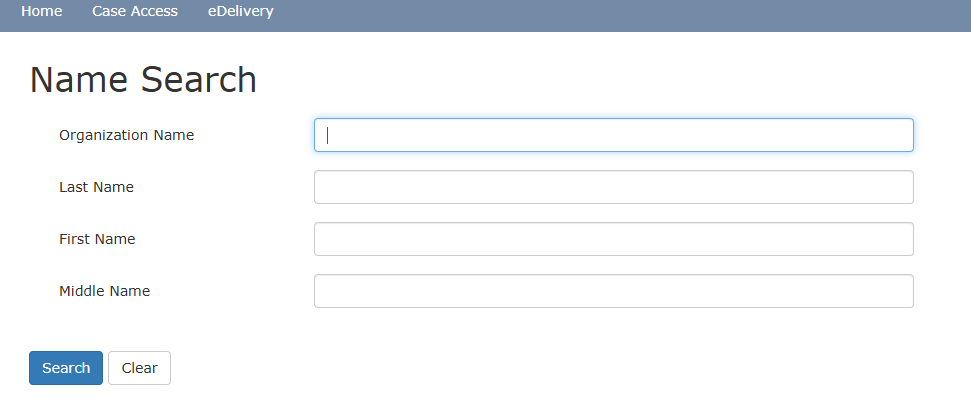
If you do not know the case number, use Case Name Search.
How to Search by Name:
- Click Case Name Search
- Enter the Last Name of the deceased or party
- Enter the First Name (if known)
- Select the appropriate case type if filtering is available
- Click Search
Name search may return multiple results. Review carefully to match:
- Filing date
- Case type (Probate)
- Party names
What Information You Can View Online
After completing a court record lookup, the system typically shows:
- Case number
- Case status
- Filing date
- Party names
- Hearing dates
- Probate filings history
Probate Court Services in Ventura County
The probate department operates within the Ventura County Superior Court and serves residents across Ventura County. It manages estate handling after death and oversees court-supervised asset control when a person cannot manage affairs independently. Through probate case management, the court validates wills, appoints representatives, and reviews financial reporting. This system protects heirs, creditors, and beneficiaries while maintaining transparency. Probate filings create a legal record of estate activity and help prevent disputes during asset transfers.
Probate Filings
Probate filings begin the formal legal probate filing process in Ventura County. A petition is submitted to open the estate and request appointment of a personal representative. The court reviews submitted documents for compliance with state rules and schedules a hearing if required. Proper filing starts the official estate administration Ventura County timeline. Accurate paperwork helps reduce delays and supports organized probate case management from the beginning of estate handling.
- Filing petitions for probate
- Submitting death certificates
- Publishing required legal notices
- Notifying heirs and creditors
- Court review and approval of estate authority
Estate Administration Ventura County
Estate administration Ventura County involves full supervision of assets, debts, and property transfers during probate case management. Once the court appoints a representative, that person collects estate assets and secures financial accounts. The court expects accurate records and timely reporting. Estate handling includes debt payment, tax settlement, and structured distribution to beneficiaries. Legal estate management protects all parties and confirms that the estate follows California probate requirements.
- Inventory and appraisal of estate assets
- Opening an estate bank account
- Paying outstanding debts and taxes
- Managing property sales if required
- Filing final accounting with the court
- Requesting distribution approval
Wills Processing and Validation
Wills processing confirms whether the submitted document meets California legal standards. The probate court reviews signatures, witness statements, and executor appointments before granting authority. This review prevents fraud and protects beneficiary rights. If disputes arise, the court schedules hearings and evaluates evidence. Probate case management includes careful review of objections to protect estate handling integrity. Clear wills processing supports smooth estate administration Ventura County procedures.
Trusts and Legal Estate Management
Trust matters sometimes appear during probate filings, especially if disputes arise or court supervision becomes necessary. Legal estate management may include reviewing trustee actions, resolving beneficiary disagreements, or clarifying trust instructions. Although many trusts operate outside probate, the court may intervene when petitions are filed. Probate case management supports orderly estate handling across both wills and trusts structures.
Trust-related services may include:
- Petition for trust interpretation
- Trustee appointment or removal
- Review of trust accounting
- Resolution of beneficiary disputes
Wills and Estates Division
The wills and estates division operates within the Ventura County Superior Court and serves residents across Ventura County. This division oversees probate filings tied to estate planning outcomes after a death. It reviews wills, confirms legal authority, and supervises estate distribution to heirs. Estate documentation submission creates a formal court record and supports fair estate handling. Through probate case review, the court protects beneficiaries, creditors, and family members during sensitive estate transitions.
Role of the Wills and Estates Division
The division manages testament processing from initial filing through final estate distribution. Its primary role involves reviewing legal will submission documents to confirm compliance with California probate rules. Judges and court staff examine estate documentation to confirm accuracy, signature validity, and witness requirements. Probate filings trigger court oversight, which limits fraud and disputes. Estate planning decisions documented in wills receive structured review through this process. Court supervision keeps estate distributions consistent with lawful instructions and state requirements.
Legal Will Submission in Ventura County
Legal will submission begins when the original will is filed with the probate clerk. The court records the document and links it to a probate filing case. Estate documentation submission requires accurate identification of the decedent and named executor. The wills and estates division checks whether the will meets statutory form standards. Testament processing may include scheduling hearings if objections appear. Clear submission procedures help the court confirm authority before estate handling begins.
Will Validation Process
The will validation process confirms whether a document reflects the decedent’s lawful intent. The court reviews signatures, witness declarations, and execution dates. Probate filings move forward once validation standards are met. If questions arise, the court evaluates evidence and testimony. Estate planning instructions receive enforcement only after this review. Validation protects beneficiaries and maintains trust in probate case management. This step forms the foundation for lawful estate distribution.
Estate Distribution and Documentation
After validation, the wills and estates division supervises estate distribution through formal probate filings. Executors submit estate documentation showing asset inventory, debt payment, and proposed distribution of marriage and divorce records. The court reviews financial records to confirm accuracy. Legal estate management continues until final approval. Estate planning instructions within the will guide asset transfers. Court oversight supports fair outcomes and confirms compliance with probate rules. Final documentation closes the estate record once distribution receives approval.
Why the Division Matters
The wills and estates division plays a central role in probate filings and estate planning outcomes. Its review process supports lawful testament processing and reliable estate documentation submission. Families rely on this division to carry out final wishes and maintain order during estate distribution. Through structured court oversight, the division supports clear legal outcomes for wills, estates, and probate cases in Ventura County.
Conservatorship Proceedings in Ventura County
Conservatorship cases in Ventura County allow the Ventura County Superior Court to appoint a responsible individual to manage personal care or financial matters for an adult who cannot act independently. The probate division reviews each petition under California probate law to confirm necessity and limit authority to what is required. Judges maintain ongoing oversight, monitor compliance, require reports, and intervene if concerns arise to protect vulnerable adults’ rights, safety, and property.
Types of Conservatorships Handled by the Court
The ventura county probate court handles several conservatorship types based on the adult’s needs. Each case focuses on either personal care, financial control, or both. Adult conservatorship cases involve support with housing, healthcare, and daily living decisions. Financial conservatorship cases focus on managing income, property, and expenses. Some cases combine both roles under one court-appointed conservator. The court defines limits clearly to avoid unnecessary control and protect independence whenever possible.
- Adult conservatorship
- Financial conservatorship
- Combined personal and financial conservatorship
Application Process and Legal Requirements
The conservatorship Ventura County process begins with filing a petition in probate court. The petitioner submits details about the proposed conservatee, medical condition, and requested authority. Supporting records often include physician statements and financial summaries. The court assigns an investigator to review the situation and interview involved parties. Legal notice must be given to close relatives. A hearing follows, where the judge reviews evidence before issuing a court order.
- Petition for appointment
- Medical or capacity declaration
- Court investigation
- Family notification
- Judicial hearing and order
Responsibilities of a Court-Appointed Conservator
A court-appointed conservator carries defined legal duties and must act in the conservatee’s best interest. Personal care conservators manage housing, medical care, and daily support needs. Financial conservators handle income, bills, assets, and recordkeeping. The court requires ongoing reporting to track decisions and spending. Accountability remains central throughout the case. Failure to follow court instructions can result in review, modification, or removal by the probate court.
- Act in the conservatee’s best interest
- Maintain accurate records
- Submit required reports
- Follow court-approved authority
Limitations and Court Oversight
Conservatorship authority remains limited to what the court approves. Major actions such as selling property or changing residence may need prior court permission. The probate court reviews reports, monitors compliance, and protects the conservatee from misuse of power. Court supervision continues until the conservatorship ends or changes. Conservatorship proceedings in Ventura County provide a legal framework that balances care, protection, and accountability for adults who need court-supervised support.
Guardianship Cases
Guardianship cases in Ventura County involve court-supervised appointments for minors or adults who cannot manage personal care or basic needs independently. Probate filings begin the legal guardian process through the Ventura County Superior Court. The probate division carefully reviews each request to protect the individual’s rights and welfare, evaluating family circumstances, living conditions, and guardian suitability. Ongoing court oversight ensures stability, safety, and lawful decision-making for those requiring structured care.
How Probate Court Handles Guardianship Cases
Guardianship cases Ventura County are processed through the probate division using formal probate filings. The court reviews petitions seeking authority over a minor or an incapacitated adult. Judges assess whether guardianship is necessary and whether less restrictive options exist. Court-supervised guardianship limits authority to approved areas only. Ongoing court involvement includes status reviews and compliance checks. This process maintains balance between protection and personal rights while supporting family-based caregiving arrangements.
- Court review of guardianship petitions
- Evaluation of guardian suitability
- Defined scope of authority
- Ongoing judicial supervision
Petitioning Steps for Minor Guardianship
Minor guardianship begins with a court petition for guardianship filed by a relative or interested party. The petitioner submits personal details, living arrangements, and reasons guardianship is requested. Supporting documents may include parental consent or medical information. Probate filings trigger a background review and required notices to parents or relatives. A hearing allows the judge to review facts and issue an order. Court approval establishes legal authority to care for the child.
- Petition submission
- Required notices to family
- Background review
- Court hearing and decision
Petitioning Steps for Incapacitated Adults
Guardianship for incapacitated adults follows a similar legal guardian filing process. The petitioner explains the adult’s limitations and care needs. Medical statements often support the request. The court evaluates evidence and may appoint an investigator. Probate filings ensure transparency and accountability. After review, the judge decides whether guardianship is appropriate and defines permitted actions. Court supervision remains active to protect the adult’s dignity and safety.
- Capacity documentation
- Investigator review
- Court evaluation
- Order defining authority
Legal Guardian Responsibilities
Legal guardian responsibilities include providing daily care, housing, education, and healthcare decisions within court-approved limits. Guardians must act in the ward’s best interest at all times. The probate court may require periodic reports detailing care arrangements. Court-supervised guardianship restricts actions outside authorized authority. Guardianship cases Ventura County remain under review until termination or modification. This structure supports lawful caregiving and prevents misuse of authority through consistent court oversight.
Probate Filing Process
Probate filings Ventura County follow a court-regulated process for opening, supervising, and closing an estate. Estate administration Ventura County cases begin with formal probate submission and continue under judicial oversight until distribution approval. All probate filings are handled by the Ventura County Superior Court serving Ventura County. The probate court reviews estate case submissions to confirm authority, asset disclosure, and compliance with California probate statutes. Legal probate filing in Ventura County requires correct court forms, verified documentation, and payment of required filing fees. Court supervision remains active throughout estate administration to protect heirs, beneficiaries, and creditors.
Steps for Probate Filings
Probate filings Ventura County begin when a Petition for Probate is submitted to the court. This filing opens the estate case and requests appointment of a personal representative. After submission, the court reviews the paperwork and schedules a hearing if required. Once approved, the court issues authority documents that allow estate administration Ventura County to move forward. Each stage follows a defined legal sequence to support accurate estate case submission and oversight.
- Prepare required court forms
- File Petition for Probate
- Pay court filing fees
- Attend probate hearing if scheduled
- Receive Letters Testamentary or Letters of Administration
Required Court Forms and Documentation
Legal probate filing in Ventura County depends on complete and accurate documentation. The court requires official records to verify identity, authority, and estate value. Probate submission cannot proceed without required forms. Estate administration Ventura County review pauses if documents are missing or incomplete. Proper documentation supports faster judicial review and reduces court follow-up requests during probate case processing.
- Petition for Probate
- Original will (if available)
- Certified death certificate
- Inventory summary of estate assets
- Notice of Petition to Administer Estate
Probate Filing Fees in Ventura County
Probate filings Ventura County require payment of court-set fees at the time of submission. These fees are standardized across California probate courts and apply to estate administration Ventura County cases. Failure to pay correct amounts results in filing rejection. The table below reflects current standard probate filing fees used by the Ventura County probate court.
| Fee Type | Amount (USD) | Description |
|---|---|---|
| Probate Petition Filing Fee | $435 | Required to open a probate estate case |
| Additional Petition Fee | $435 | Applies to amended or subsequent probate petitions |
| Certified Copy (per copy) | $40 | Court-certified documents |
| Letters Issuance Fee | $25 | Letters Testamentary or Administration |
| Court Investigation Fee (if ordered) | $400–$1,500 | Applied in certain contested or supervised cases |
| Publication Notice Cost | Varies | Paid directly to approved newspaper |
Location & Contact Information
Ventura County Probate Court location details help visitors reach the correct courthouse for probate filings and estate matters. The ventura county courthouse serves as the central location for probate services and clerk office support. The probate court operates within the Ventura County Superior Court at the main Ventura County Courthouse, often referred to as the Hall of Justice. This courthouse handles probate filings, conservatorship matters, guardianship cases, and estate administration services for residents across Ventura County. Visitors should plan ahead and confirm department locations within the building before arrival.
Official Court Address and Clerk Office Details
The ventura county probate court location is listed below for in-person visits, document submission, and clerk office assistance. This address is used for most probate-related court appearances and filings.
Court Address:
800 South Victoria Avenue
Ventura, CA 93009
Courthouse Hours:
Monday to Friday
8:00 AM – 4:00 PM (excluding court holidays)
Phone and Local Probate Court Contact
For general inquiries, filing confirmation, or clerk office questions, the courthouse provides centralized phone support. Calling ahead helps confirm probate department hours, filing requirements, and courtroom assignments.
Main Courthouse Phone:
(805) 289-6000
Frequently Asked Questions
This FAQ section addresses common concerns people have about probate filings and court procedures in Ventura County. Each question focuses on real estate administration questions, wills and estate queries, and court-supervised matters handled by the probate court. The answers below provide clear, practical explanations to help families, executors, and caretakers prepare for probate-related cases.
How do I file a probate case in Ventura County?
To file a probate case, a petitioner must submit probate filings to the Ventura county probate court, which operates under the Ventura County Superior Court. The process begins by completing the Petition for Probate and filing it with the probate clerk. Required documents include the original will, if one exists, and a certified death certificate. Filing fees must be paid at submission. The court reviews the paperwork and schedules a hearing if required. Once approved, the court issues Letters Testamentary or Letters of Administration, allowing estate administration to formally begin under court supervision.
What does the probate process involve?
The probate process involves court-supervised estate administration from start to finish. Probate filings open the case and request appointment of a personal representative. The probate court reviews wills, confirms authority, and requires notice to heirs and creditors. The representative collects assets, pays debts, and manages property according to court rules. Periodic reporting keeps the court informed. Estate administration questions often relate to timelines and required filings. The case remains open until the court approves final accounting and authorizes distribution, after which the estate is officially closed.
How long does probate take in Ventura County?
Probate timelines depend on estate size, asset type, and case activity. Most probate filings in Ventura County take between nine months and eighteen months to complete. The probate court enforces notice periods, creditor claim deadlines, and reporting schedules that affect duration. Simple estates with few assets may move faster. Contested matters, property sales, or tax issues often extend estate administration timelines. Court availability and compliance with filing requirements also influence processing time. Probate ends only after the court approves final distribution and closes the case.
Can probate be avoided for an estate?
Some estates avoid probate through prior estate planning. Assets held in trusts, jointly owned property, and accounts with named beneficiaries often bypass probate filings. The probate court becomes involved when assets remain solely in the decedent’s name. Wills alone do not avoid probate. Estate administration questions often arise when families review asset ownership after death. Evaluating titles, beneficiary designations, and trust documents helps determine whether probate filings will be required. Avoidance depends entirely on how assets were structured before death.
How do I open a guardianship case?
Opening a guardianship case requires filing a court petition for guardianship with the probate court. Probate filings include information about the minor or dependent adult, the proposed guardian, and living arrangements. The court provides notice to parents or relatives and may order background reviews. A hearing allows the judge to assess necessity and suitability. If approved, the court issues an order granting authority. Guardianship cases remain under court supervision, with reporting requirements to protect the ward’s welfare and legal rights.